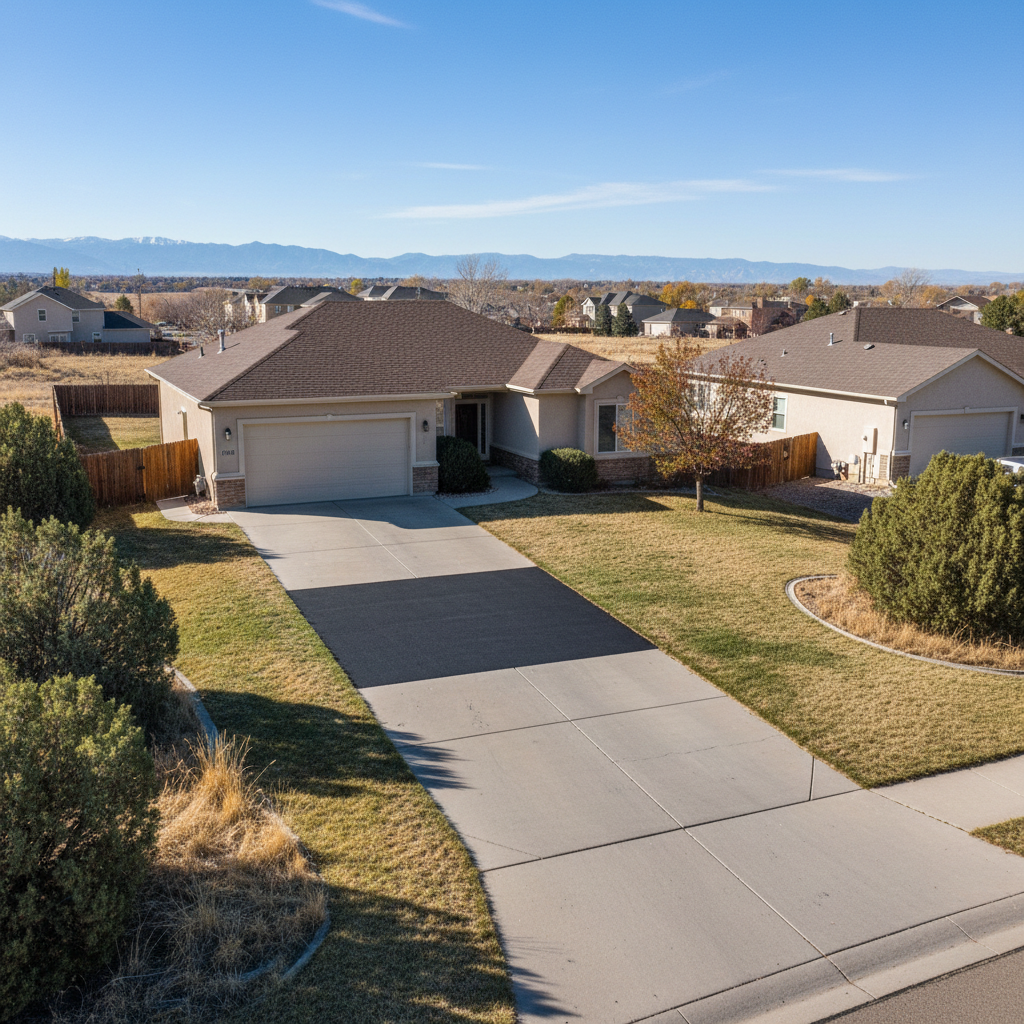
Your asphalt driveway or parking lot is taking a beating out here in Brighton, isn't it? I see it all the time. One day it's fine, the next you've got a fresh crack snaking across it, or a pothole that seems to have appeared overnight. It's not just bad luck; it's our Colorado climate at work, and it demands a specific approach to asphalt repair.
The Brighton Climate Challenge
We all know what it's like living here. We get those scorching summer days where the sun bakes everything, followed by freezing nights in winter. Then there's the spring thaw, where all that melted snow and ice finds its way into any tiny crack, expands when it refreezes, and boom – you've got a bigger problem. That freeze-thaw cycle is a killer for asphalt. It's probably the biggest reason I get calls from folks in neighborhoods like Prairie Center, or even out by Barr Lake, where the ground can shift a bit more.
Beyond the temperature swings, we've got the sun. UV rays break down the binders in asphalt, making it brittle over time. And let's not forget the occasional heavy hailstorm or the general wear and tear from vehicles. All these factors combine to make asphalt repair in Brighton less about a quick fix and more about a strategic one.
Common Repairs We Tackle
So, what kind of damage am I usually seeing? It varies, but there are a few common culprits:
- Cracks: These are the most frequent. From small hairline cracks to wider, alligator-patterned ones, they're the entry point for water. If you don't seal them up, that water gets under the asphalt, weakens the base, and then you're looking at bigger issues.
- Potholes: Everyone hates potholes. They form when water gets into cracks, freezes, expands, and then traffic drives over the weakened spot, dislodging the asphalt. They're not just ugly; they're a hazard for tires and suspensions.
- Raveling: This is when the aggregate (the small stones) starts to come loose from the asphalt binder. It usually means the surface is aging and drying out, and it's a sign that you need to act before it gets worse.
- Depressions or Uneven Spots: Sometimes, the base underneath the asphalt can settle or shift, creating low spots where water collects. This can lead to further deterioration and even drainage problems.
Each of these issues needs a specific repair method. You can't just slap some cold patch on a big alligator crack and expect it to hold up through another Brighton winter. You need to understand the root cause and apply the right solution.
Why Local Expertise Matters for Your Asphalt
This isn't just about laying down some hot mix. It's about knowing the local conditions. I've been doing this long enough to know how our specific soil types, our crazy weather patterns, and even the typical traffic loads in different parts of Brighton affect asphalt. For instance, the clay-rich soils we have in some areas can be more prone to expansion and contraction, which means the sub-base preparation for any repair needs to be absolutely spot on.
When you call someone like Asphalt Excellence, you're not just getting a crew; you're getting folks who live and work right here. We're familiar with the permits you might need for certain commercial jobs downtown, or the best time of year to do a residential driveway repair to ensure it cures properly with our fluctuating temperatures. We know that a repair done in late fall needs to be robust enough to handle immediate freezing, unlike a repair done in July.
Getting your asphalt repaired properly saves you money in the long run. Ignoring a small crack now means you'll likely be dealing with a much more expensive pothole or even a full-blown resurfacing project down the road. Don't wait until it's a major headache. Get those repairs done right, and keep your pavement looking good and functioning safely for years to come.